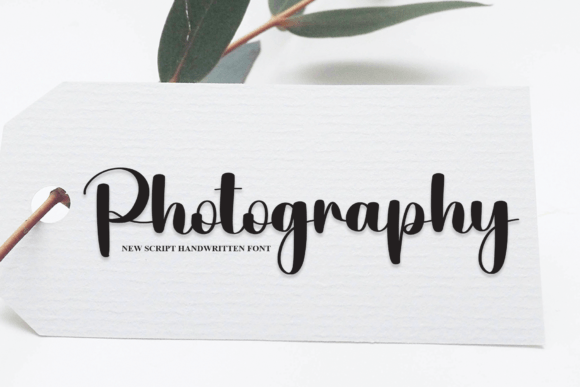
Photography: A Bold Handwritten Font for Authentic Design
Photography is a gorgeous and bold handwritten font, crafted to give your headlines and logotype projects a stylish touch. This font reads as strong, confident, and dynamic and can add tons of nostalgic character to your designs. Whether you're a freelance graphic designer or a small business owner creating your own brand, Photography brings a human, imperfect warmth that digital precision often lacks. In this guide, we'll explore how to make the most of its unique personality.
Why Handwritten Boldness Works for Modern Branding
In an era of clean, minimalist sans-serifs, a font like Photography stands out precisely because it feels unpolished—in the best way. Its thick strokes and natural variations mimic ink on paper, giving logos and wordmarks a confident, approachable feel. This is ideal for brands that want to communicate authenticity, creativity, or nostalgia without screaming for attention. Photography’s weight ensures it remains legible at larger sizes, making it a natural fit for hero text on websites, product packaging, or mural-style signage.
Real-World Uses: From Coffee Bags to Concert Posters
Because Photography works best as a headline or logotype, its sweet spot lies in projects where emotional impact matters. Consider these practical applications:
- Brand identity: Hand-drawn logos for artisanal bakeries, barbershops, or music festivals.
- Packaging: Coffee bags, hot sauce labels, or craft beer cans—any product wanting a handmade feel.
- Editorial layouts: Magazine pull-quotes, chapter openers, or zine covers.
- Social media graphics: Instagram story titles and YouTube thumbnail text.
- Merchandise: T-shirt prints, tote bags, or enamel pins.
- Invitations: Wedding suites, birthday parties, or gallery openings.
In each case, Photography shifts the tone from generic to personal. A restaurant menu header set in this font feels like the chef’s own handwriting, while a music poster gains a punk- or folk-show energy.
Pairing Photography with Complementary Fonts
To avoid visual overload, pair Photography with restrained, neutral typefaces. Since Photography already delivers strong personality, use it sparingly—typically for one to three words (a brand name, a headline, a call-to-action). For body text, choose a clean serif like Lora or a geometric sans like Work Sans. For subheadings, a simple all-caps sans-serif such as Montserrat creates a modern contrast. The key is balance: let Photography be the expressive lead, while supporting fonts handle information hierarchy.
Design Flexibility: Weight, Spacing, and Digital Use
One common concern with handwritten fonts is readability on screens or at small sizes. Photography’s bold stroke width helps maintain legibility even on mobile devices, but it truly shines at 36pt and above. If you’re using it for a website hero section, increase letter spacing slightly (letter-spacing: 0.02em in CSS) to improve clarity. For print, test a few sizes—on product labels or book covers, Photography remains readable down to about 18pt for short words. It also works in digital products like e-book covers, presentation titles, or app onboarding screens where a human touch adds warmth.
Licensing and Where to Use Photography Commercially
Before downloading or purchasing Photography, review the license terms. Most quality handwritten fonts offer standard desktop licenses (for print, logos, and static graphics) as well as extended licenses for webfonts, apps, or merchandise resale. Here’s what to look for:
- Logo use: Usually included—you can create a trademarked logo without extra fees.
- Webfont: Requires a separate license if you embed the font via @font-face.
- E-pub: Some licenses cover eBooks and digital ads.
- Merchandise for sale: If you print T-shirts or mugs with Photography, check for a “commercial products” clause.
Many foundries also offer a test drive option—paste your own wordmark to see how Photography performs. This is highly recommended, as a handwritten font’s character can change dramatically with different letter combinations.
Reviving Nostalgia Without Losing Modern Appeal
What makes Photography special is its ability to feel both vintage and fresh. The slightly irregular baseline and varied stroke widths echo mid-century signage, punk flyers, and hand-painted storefronts. Yet the letterforms are clean enough to avoid looking sloppy. To lean into the nostalgic side, use it with distressed textures, faded color palettes, or grain overlays. For a contemporary look, pair Photography with stark white space, bright neon accents, or bold geometric shapes. Either way, this font rewards experimentation—try it in all-lowercase for intimacy or all-caps for a louder statement.
Ultimately, Photography gives designers a tool to inject personality back into digital and print work. It’s not a font for long paragraphs or dense information, but for the moments that demand a human voice—your logo, your headline, your first impression. Test it on packaging mockups, social templates, or a simple “Hello” on your portfolio site. You’ll likely find that one strong, confident font is all it takes to shift an entire project from forgettable to memorable.